Have you ever wondered what it would be like to live in the time of Jesus and His disciples? To witness His miracles firsthand, to converse with Him directly, and to experience the extraordinary moments that unfolded in His presence? It’s easy to fall into the enchantment of romanticizing that era, believing that life was simpler and faith came effortlessly. Yet, there’s an essential aspect we often overlook—an aspect that demands our attention and exploration.
Recently, I was listening to a sermon and the pastor mentioned something that truly resonated with me. She said “There is a difference between information and revelation”. Wow!! How often do we engage with the word of God, absorbing information without truly grasping its deeper meaning? Information alone cannot bring about breakthroughs, knowledge, peace, or any other positive outcome. It is through revelation that these transformative experiences occur. The revelation we are talking about here is when God gives you a deeper meaning of a specific bible verse, a message He intended for you.
Let’s reflect on a moment when Jesus, praying privately with His disciples, questioned them about His identity. He asked, “Who do the crowds say I am?” Some replied, “John the Baptist,” while others believed He was Elijah or one of the ancient prophets resurrected. Then He turned to His disciples and asked, “But who do you say I am?” Peter, under divine inspiration, declared, “You are God’s Messiah” (Luke 9:18-20).
Understanding who Jesus was during that time was no easy task. Although He performed miraculous acts such as raising the dead, turning water into wine, healing the sick, and feeding thousands with only 5 breads and two fishes, these same miracles had been carried out by prophets in the name of Jesus even before His arrival. Consequently, people were often confused, unable to recognize the Messiah standing before them. However, through divine revelation, God opened Peter’s eyes, enabling him to perceive the true nature of Jesus beyond His miraculous works, the son of a carpenter, the teacher; Peter recognized Jesus as the Messiah, the anointed One, the Savior.
To gain a deeper understanding of God’s word, we must intimately know Jesus Himself because He is The Word (John 1). He desires to open our eyes and reveal the depth of His love and goodness toward us. Our pursuit should revolve around immersing ourselves in Him, desiring nothing else but His presence. Often, we approach prayer with the aim of fulfilling our daily checklist or making requests, forgetting that Matthew 6:33 instructs us to seek God’s kingdom and righteousness first, with the assurance that our other needs will be met.
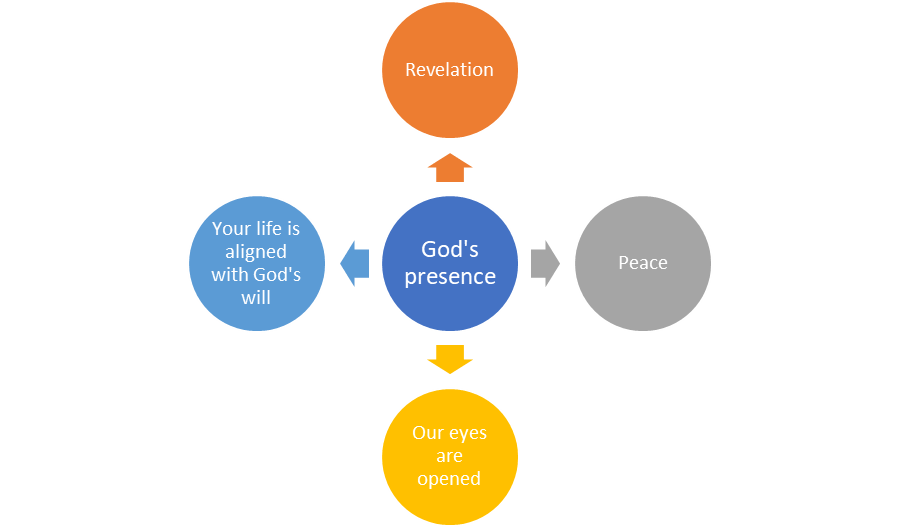
When we read Matthew 6:33, we often overlook the significance of “righteousness.” However, this is the focal point we should concentrate on. You may wonder how to seek righteousness. Righteousness comes through knowing God intimately and cultivating an intentional, personal relationship with Him. There are no shortcuts in this pursuit. Consider it as in nourishing our physical bodies through proper nutrition, hydration, and exercise. Similarly, we should prioritize nourishing our spirits by spending time with God. Without the sustenance of God’s Word, our spirits grow weak, easily shaken by the storms of life. Yet, by investing time in His presence, we receive divine revelation and continually deepen our understanding of who He is and our identity in Christ. In His presence, we align our thoughts, decisions, and actions with His will, as He communicates directly with our spirits, imparting understanding and guidance.
Prayer: Heavenly Father, I am grateful for Your love, goodness, and mercy. Thank You for providing Your Word as a guide for this life and for giving me the Holy Spirit as my helper. I humbly ask You to reveal Yourself to me once again and make Your communication clear. Draw me closer to You, for You alone are my heart’s desire. Nothing in this world can satisfy me as You are the one true treasure I need. In Jesus’ name, I pray. Amen.
 Blog posts